








 Mythbusting ·
 Do GLP-1s Cause Bone Loss?
·
Dr. Yoni Freedhoff ·
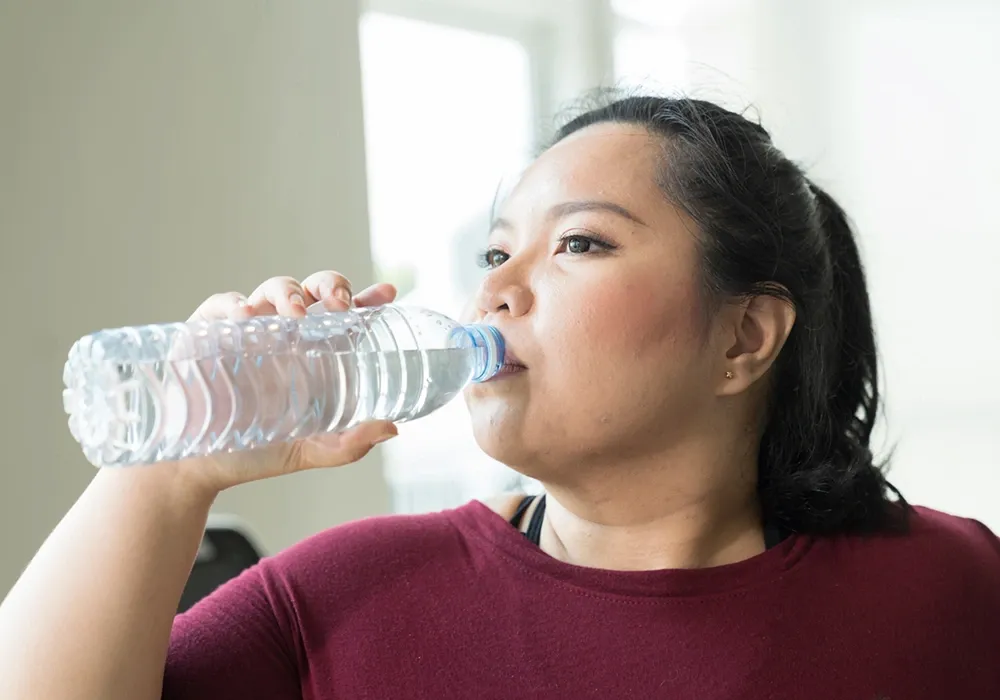
Drink more water, lose more weight. You’ve heard it from magazines, influencers, maybe even a well-meaning friend with a two-litre bottle on their desk. And wouldn’t it be lovely if it were true.
Here’s the honest answer: no, drinking water does not meaningfully cause weight loss on its own. A 2024 meta-analysis of eight randomized controlled trials in adults with overweight or obesity found no significant overall effect of drinking more water on body weight. But two water habits do have real, measurable, and modest effects: swapping caloric drinks for water (or diet drinks), and, for some people, drinking about 500 ml before meals. The rest is myth, and the details are worth two minutes of your time.
Barely, and this is probably the most oversold claim in the whole water-and-weight story. The figure you’ll see quoted everywhere is that drinking water boosts metabolism by 30%. It’s a real number from a real study, and it’s doing a lot of misleading work.
In that study, 14 normal-weight adults drank 500 ml of water while researchers measured their energy expenditure. Metabolic rate did rise about 30%, for roughly 30 to 40 minutes. Add it all up and the total effect was about 100 kilojoules. That’s around 24 calories, roughly a quarter of an apple. And about 40% of it was simply the cost of warming the water from room temperature to body temperature. Even the study’s own authors put the ceiling at about 96 calories a day, and that’s for two full litres of water.
But it gets worse for the metabolism story. When a later study repeated the measurement with a sham-drinking control (comparing water against the act of pretending to drink) the metabolic bump nearly vanished: under 3%, and no different from the sham. The honest reading is that water-induced “fat burning” is somewhere between trivially small and not real.
So no, your glass of ice water is not a workout.
For some people, yes. This is the one place the evidence gets interesting, because who you are and when you drink both matter.
Two randomized trials have tested “preloading” (drinking about 500 ml of water before main meals) as an actual weight-loss strategy:
Notice what both trials have in common. The participants were middle-aged and older adults. That’s not an accident. In a feeding study that compared age groups directly, water 30 minutes before lunch cut intake in adults aged 60 to 80, but did precisely nothing in adults aged 21 to 35, who ate the same amount either way. The likely reason is unglamorous: stomachs empty faster when you’re younger, so by the time lunch arrives, the water has left the building.
Timing changes the picture for younger people, though. When lean young men drank 568 ml immediately before a meal rather than 30 minutes before, they ate about 140 fewer calories at that meal. A real effect, at one meal, in a lab.
But when I went looking for the study that would actually settle it (premeal water, younger adults, weight on the scale as the outcome) I couldn’t find one. No trial has shown premeal water producing weight loss in younger adults. An acute nudge at a single lunch is not a weight-loss outcome.
And simply drinking more water across the day, without the meal timing? A pair of experiments had adults drink up to four 500-ml bottles through the morning before a buffet lunch. In the first experiment, only normal-weight participants ate less; in the second, nobody did, despite confirmed hydration. General water-loading is not a reliable appetite tool. Notably, it didn’t work at all in participants with overweight or obesity, the very people the advice is aimed at.
If preloading appeals to you and you’re in or past middle age, it’s cheap, safe, and worth a try; 500 ml about half an hour before meals is what the trials used. Just anchor your expectations to what the evidence shows: a supporting habit worth a kilogram or two alongside real dietary change, not a strategy.
Yes, this one actually works, and it works for the least mysterious reason imaginable: if your current drinks have calories and water doesn’t, the swap removes calories.
In the 2024 meta-analysis, trials that specifically substituted water for sugar-sweetened beverages showed a modest weight benefit of about 0.8 kg, while trials that just promoted drinking more water showed nothing. That split is the entire article in miniature: water helps when it’s replacing calories, not when it’s added on top.
Two details from the trials are worth knowing, because they cut against the usual wellness framing:
So if you love your diet cola, this is one guilt you can put down. The evidence says the swap that matters is away from sugar-sweetened drinks; whether you land on water or a diet drink is a preference, not a moral choice. This applies to alcohol too, by the way: liquid calories are liquid calories.
There is no weight-loss number, and the famous one you know was never real. A Dartmouth physiologist went hunting for the origin of the “eight glasses a day” rule. He searched the literature, including the older material the databases don’t cover, and consulted specialists in thirst and fluid intake, and he came up empty. No studies behind it at all. Survey data from thousands of healthy adults suggest such volumes simply aren’t necessary, and (bonus myth-busting) your coffee counts toward your fluid intake, caffeine and all.
For most healthy adults, thirst is a precise guide. The body’s water-balance system is one of physiology’s better pieces of engineering, and it doesn’t need a phone app. The exceptions are real, though: illness, hot weather, and long or intense exercise all raise your needs, and some medical conditions and medications change the picture, which may be worth a conversation with your own physician if it applies to you.
One caution at the far end: it is possible to overdo it. Drinking well beyond thirst, usually in endurance-exercise settings, can dilute blood sodium, a condition called hyponatremia that consensus guidelines take seriously enough to recommend, simply: drink to thirst. Rare, but real.
“Water flushes fat out of your body.” No. Fat leaves your body when you burn more energy than you take in; water is not involved in escorting it out. Across eight randomized trials, more water did not mean less body weight.
“Water alone causes weight loss.” The same trials answer this one. If drinking more water caused weight loss, we’d see it in randomized trials, and we don’t.
“Everyone needs 2 litres (or 8 glasses) a day.” The physiologist who went looking for the evidence behind that rule found none. Drink when you’re thirsty.
“Cold water burns extra calories.” Technically the warming cost is real, and it’s about 40% of an already tiny ~24-calorie effect. If ice water were a weight-loss strategy, winter would be a treatment.
Water is good for you. It’s calorie-free, it’s cheap, and if it’s replacing pop, it’s doing real work. But it’s a supporting actor, and the wellness industry has spent years billing it as the lead. If water consumption meaningfully drove weight loss, there’d be far fewer people struggling with their weight.
If you’re ready to work on the things that do move the needle, our pieces on managing hunger cues and what actually helps with weight loss, with or without medication are good next reads.
Put your effort where the calories are.
How does drinking water help with weight loss?
Mostly indirectly. Replacing sugar-sweetened drinks with water removes their calories, which produced modest weight loss in randomized trials. Drinking about 500 ml before meals helped middle-aged and older adults lose roughly 1.3 to 2 kg more over 12 weeks in two trials. Drinking extra water on its own, without replacing calories or timing it before meals, showed no significant effect on body weight across eight randomized trials.
How much water should I drink a day to lose weight?
There is no amount of water shown to cause weight loss. The “8 glasses a day” rule has no scientific basis, and for most healthy adults, drinking to thirst is enough. If you want to try the studied premeal approach, the trials used about 500 ml roughly 30 minutes before main meals, and found benefits in middle-aged and older adults.
Does cold water burn more calories?
Only trivially. Drinking 500 ml of water raises energy expenditure by at most about 24 calories, and roughly 40% of that is the cost of warming the water to body temperature. A controlled study comparing water to sham drinking found essentially no metabolic effect at all. Cold water is refreshing; it is not a weight-loss tool.
Does water flush fat out of your body?
No. Fat loss happens when your body uses more energy than it takes in; water does not carry fat out of the body. In a meta-analysis of eight randomized trials, drinking more water had no significant overall effect on body weight.

Since 2004, Dr. Yoni Freedhoff, an Associate Professor of Family Medicine at the University of Ottawa, has dedicated his practice to obesity medicine. Canada's most outspoken obesity expert, Dr. Freedhoff is regularly sought out by the international media for commentary on nutrition and weight matters, and for his book, The Diet Fix: Why Diets Fail and How to Make Them Work. Dr. Freedhoff's diet agnostic philosophy and lessons learned from working with over 10,000 patients is the foundation of what Constant Health has been built upon.
Follow onContinue reading
Mythbusting ·  Mythbusting ·
 Mythbusting ·